Reverse Osmosis
Maximum Filtration, Minimal Footprint - Removing 99% of Contaminants.
Crystal-Clear Drinking Water — Straight from Your Tap
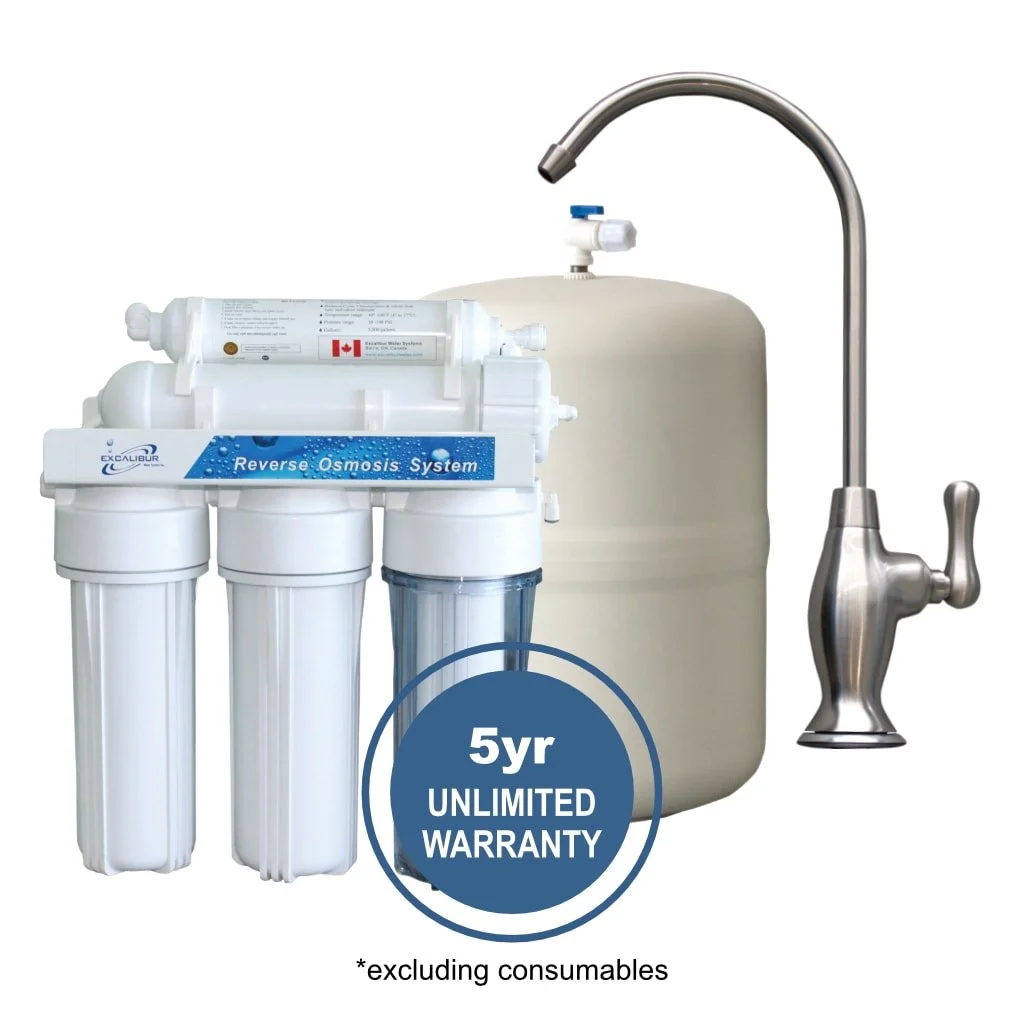
💧 Average 75 Gallons per day capacity.
💧 5 Gallon holding tank for on demand drinking water
💧 Can be connected to refrigerator for water and ice
💧 Removes: 99.5% of contaminates, including heavy metals
💧 Lead-Free faucet
Reverse Osmosis removes the contaminants you can’t see but don’t want in your body — like fluoride, lead, chlorine, nitrates, and more. It's a powerhouse under your sink that delivers crisp, refreshing water with every pour.
Reverse Osmosis
Removes Chemicals and Heavy Metals such as:
Fluoride
Chlorine
Ammonia
Benzene
Chromium
PCB's
Ethylene
THM's
Lead
Copper
Aluminum
Silver
Nickel
Cadmium
Zinc
+ And Many More
The Clean Water Choice for Modern Homes
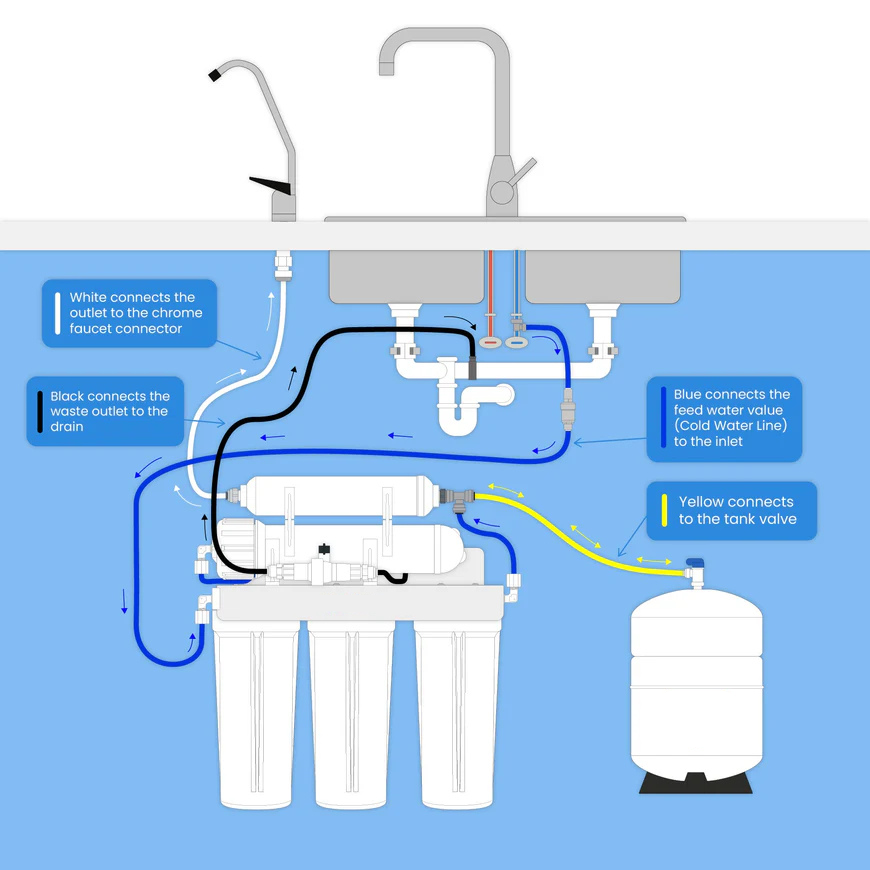
Reduce odours, improve flavour, eliminate bacteria, and other viruses from your water supply.
💧
Drinking Reverse Osmosis purified water can improve your health and well being.
💧
Purified water helps protect against a variety of ailments such as: Colds, Constipation, Urinary Track Infections, Kidney Stones and Bladder Cancer.
💧
Reverse osmosis filters out the bad stuff and leaves you with clean,
refreshing water for drinking, cooking, and coffee-making bliss.
Your water should taste like... water.
Simple, safe, and seriously satisfying.
Pure Water, Peace Of Mind
5 - Stage Reverse Osmosis
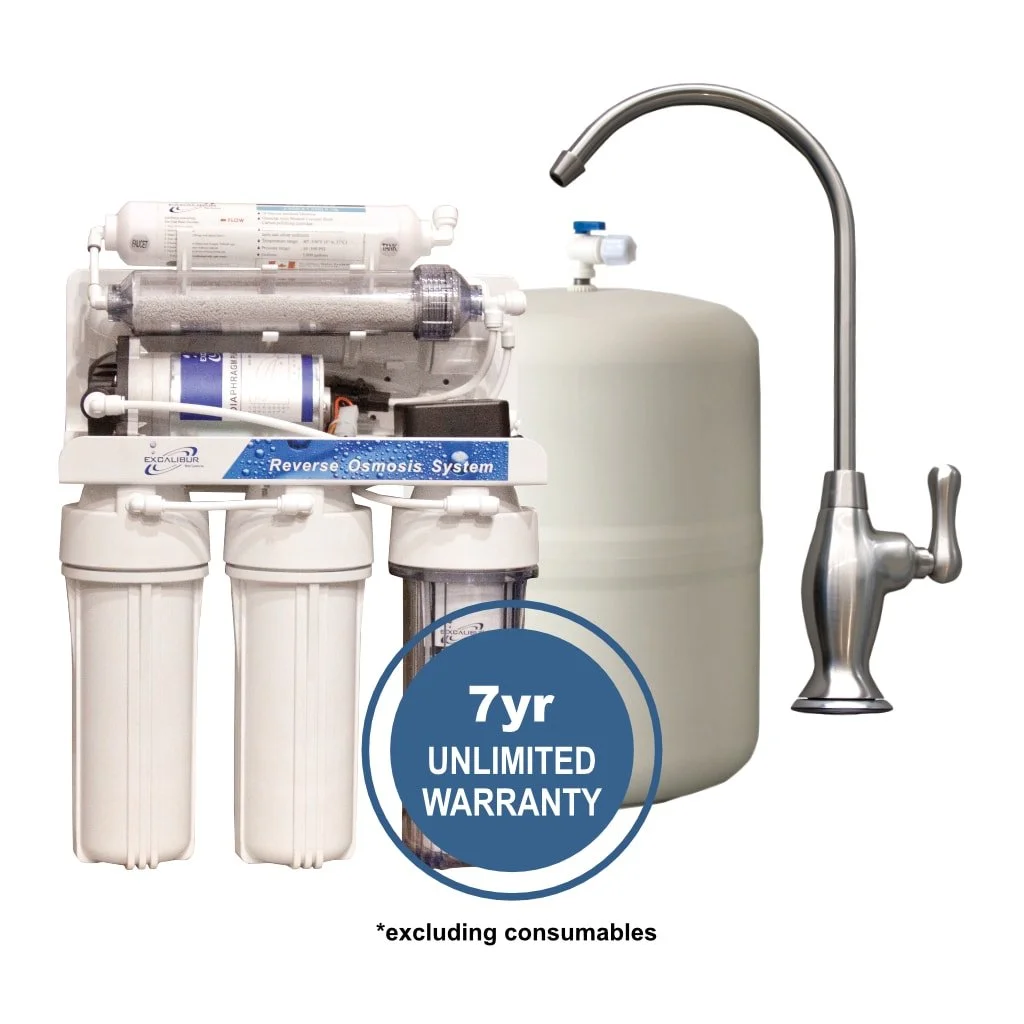
7 - Stage Reverse Osmosis
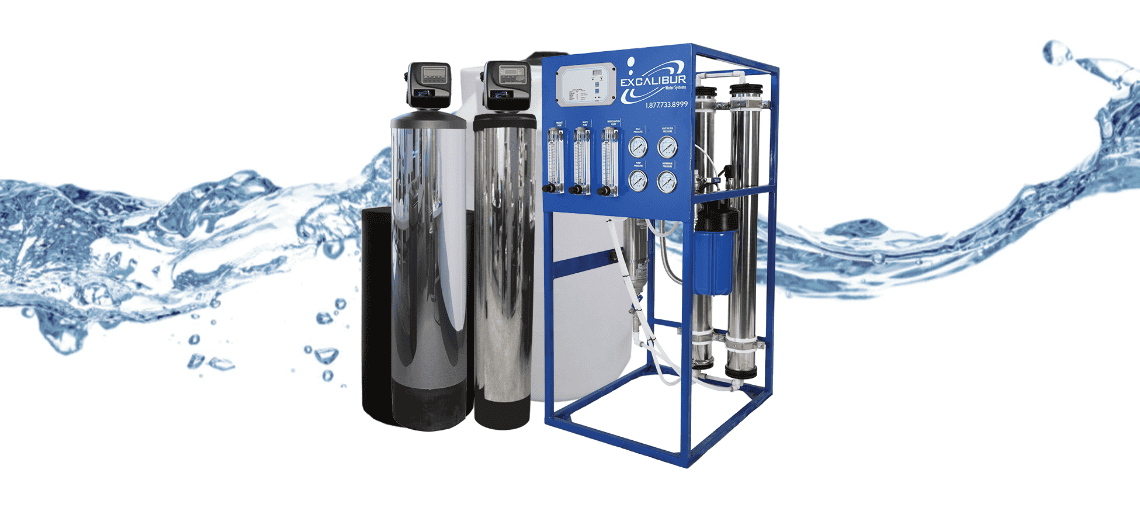
WHOLE HOME Reverse Osmosis System
Your Questions Answered:
Everything You Need to Know About RO Drinking Water System
Q: What is a Reverse Osmosis (RO) system and how does it work
A: A Reverse Osmosis system is the most advanced water filtration technology available for your home. It uses a semi-permeable membrane to filter out contaminants, including salts, chemicals, and heavy metals, with water forced through the membrane under pressure, leaving behind larger particles while only pure water passes through.
Think of it like this: The RO membrane has microscopic pores that are so small, only water molecules can pass through. Everything else - chemicals, metals, bacteria, viruses, dissolved solids - gets trapped and flushed away.
The typical RO system has 4-5 stages:
Stage 1: Sediment Filter
Removes dirt, rust, sand, and larger particles
Protects the membrane from damage
Usually 5-micron filter
Stage 2: Pre-Carbon Filter
Removes chlorine, taste, and odor
Protects the RO membrane (chlorine damages it)
Improves water flavor
Stage 3: RO Membrane (The Heart of the System)
Removes 95-99% of dissolved contaminants
Where the "magic" happens
Membrane pores are 0.0001 microns (microscopic)
Stage 4: Post-Carbon Filter
Final "polishing" of water
Removes any remaining taste or odor
Ensures crystal-clear water
Stage 5: Remineralization (Optional but Recommended)
Adds back beneficial minerals (calcium, magnesium)
Improves taste
Balances pH
Result: The purest, cleanest drinking water possible - better than bottled water, right from your tap.
Q: What does a Reverse Osmosis system actually remove?
A: RO systems are incredibly effective. Since RO systems are the most effective water filters, removing up to 99.99% of contaminants, RO water is safe to drink.
Here's what RO removes (95-99% reduction):
Heavy Metals:
Lead (causes brain damage, especially in children)
Arsenic (carcinogen)
Mercury (neurotoxin)
Chromium-6 (carcinogen)
Cadmium (kidney damage)
Copper (in excess)
Aluminum
Chemical Contaminants:
Fluoride (controversial additive)
Chlorine and chloramines
Nitrates and nitrites (from fertilizer runoff)
Sulfates
Phosphates
PFAS/"Forever Chemicals" (linked to cancer)
Pesticides and herbicides
VOCs (Volatile Organic Compounds)
Pharmaceuticals and hormones
Microorganisms:
Bacteria (E. coli, Salmonella, etc.) - most types
Cysts (Giardia, Cryptosporidium)
Many viruses (due to size)
Dissolved Solids:
Total Dissolved Solids (TDS) - reduces by 95%+
Salts (sodium chloride, calcium, magnesium)
Minerals (both good and bad)
Taste & Odor Issues:
Sulfur smell ("rotten egg")
Metallic taste
Chemical taste
Cloudiness
Important Note: Reverse Osmosis systems do not effectively remove most bacterial microorganisms (such as viruses and bacteria), organic compounds, dissolved gases like methane, radon, and carbon dioxide in all cases. For well water with bacteria concerns, we recommend adding UV sterilization after the RO system for complete protection.
Q: What does RO NOT remove?
A: RO is powerful, but not perfect. Here's what it doesn't remove well:
Dissolved Gases:
Radon
Carbon dioxide
Methane
Hydrogen sulfide (in gas form)
Some Organic Chemicals:
Certain pesticides (small molecules)
Some VOCs (if they're smaller than water molecules)
Why this matters:
If you have well water, you may need additional treatment (UV, carbon filtration, aeration)
For city water, RO alone is usually sufficient
We test your water first to determine exactly what you need
Our recommendation: Combine RO with carbon pre-filters (included in most systems) and UV sterilization if you're on well water. This gives you complete protection.
Q: Where does an RO system get installed?
A: Most common: Under your kitchen sink (90% of residential installations)
What you get:
Dedicated faucet on your countertop (separate from main faucet)
Small storage tank under sink (holds 2-4 gallons of filtered water)
All filtration equipment hidden in cabinet
Instant access to purified water for drinking and cooking
Other installation options:
Whole-home RO (rare, expensive, usually only for specific water issues)
Basement install with line to kitchen (if under-sink space is limited)
Multiple faucets (kitchen + bathroom + fridge)
What you'll need:
Space under sink (about 12" x 15" x 18")
Cold water line connection
Drain line connection (for wastewater)
Electrical outlet (for pressurized systems, optional)
Installation takes 2-3 hours for a typical under-sink system.
Q: Do I need an RO system if I already have a water softener?
A: Yes - they do completely different jobs.
Water Softener:
Removes hardness (calcium and magnesium)
Treats ALL water in your home
Protects appliances, pipes, fixtures
Makes soap work better
Improves skin and hair
Does NOT purify drinking water
Reverse Osmosis:
Removes contaminants, chemicals, heavy metals
Treats ONLY drinking water (one faucet)
Makes water safe and pure
Improves taste dramatically
Does NOT soften water or protect appliances
The ideal setup:
Whole-home water softener → Protects your home and appliances
Under-sink RO system → Purifies your drinking water
Think of it this way:
Softener = Protection for your house
RO = Protection for your body
They work together perfectly. In fact, RO systems work BETTER with softened water feeding them (less scaling on the membrane, longer filter life).
Q: Will RO save me money compared to bottled water?
A: Absolutely. The savings are massive.
Average family (4 people):
Drinks 3-4 cases of bottled water per week
Cost: $4-5 per case × 3.5 cases × 52 weeks = $728-910/year
Over 10 years: $7,280-9,100
RO System costs over 10 years:
Initial system: $1,500
Filter replacements: $1,500 ($150/year × 10 years)
Total: $3,000
Your savings: $4,280-6,100 over 10 years
Plus these hidden benefits:
No more lugging heavy cases from the store
No more running out of water
No more plastic waste (1,800+ bottles/year eliminated)
Better water quality than most bottled brands
Ice cubes that don't taste weird
Coffee and tea taste incredible
Cooking with pure water
Environmental impact: Average family eliminates 18,000 plastic bottles over 10 years. That's the equivalent of removing 1,200 lbs of plastic from landfills and oceans.
Convenience factor is priceless. Pure water on demand, 24/7, forever.
Q: Is RO water healthy to drink?
A: Yes, RO water is safe and healthy.
The concern people have is: "Doesn't it remove beneficial minerals?"
The truth: Reverse osmosis removes contaminants, but also some necessary minerals, such as magnesium, calcium and iron. Foods cooked using reverse osmosis-treated tap water should not be a problem.
Here's what you need to know:
You get 95%+ of minerals from food, not water:
1 glass of milk = calcium in 50 glasses of tap water
1 serving of spinach = magnesium in 100 glasses of tap water
1 banana = potassium in 200 glasses of tap water
Your diet is your mineral source, not your water.
Plus:
One of the biggest perks of reverse osmosis is its ability to filter out dangerous substances like lead, arsenic, fluoride, and other toxins that could lead to health issues over time.
Removing harmful contaminants is far more important than trace minerals
If you're still concerned:
Get a system with remineralization stage (adds back calcium, magnesium)
Eat a balanced diet (you're already getting plenty of minerals)
Take a multivitamin if you're worried (though you probably don't need to)
What doctors say: No credible medical organization recommends against RO water. The removal of lead, arsenic, fluoride, and other toxins far outweighs any mineral loss.
Bottom line: RO water is the purest, safest drinking water you can get. Period.
Q: Does RO remove fluoride? Is that good or bad?
A: Yes, RO removes 93-97% of fluoride.
Because fluoride molecules are larger than water molecules, reverse osmosis will filter out fluoride effectively.
Whether this is good or bad depends on your perspective:
Arguments FOR fluoride removal:
Fluoride is a neurotoxin in high doses
Linked to lower IQ in children (controversial studies)
You already get fluoride from toothpaste
It's added to water without your consent
Many countries don't fluoridate water
Arguments AGAINST fluoride removal:
Fluoride prevents tooth decay
Public health benefit, especially for kids
Dosage in water is considered safe by Health Canada and CDC
You'd need to ensure kids get fluoride from other sources (toothpaste, dentist)
Our take: This is a personal choice. We don't tell you what's right for your family.
What we know:
RO gives you the CHOICE (you can remove it or not)
If you want fluoride, you can add it back (drops, supplements, or just use fluoride toothpaste)
If you don't want it, RO is the most effective way to remove it
For kids: If you remove fluoride from water, make sure they:
Brush with fluoride toothpaste twice daily
See a dentist regularly
Consider fluoride treatments at dentist
Or use fluoride drops (available at pharmacies)
The beauty of RO: You control what's in your water, not the municipality.
Q: Will RO water taste different?
A: Yes - dramatically better.
What you'll notice immediately:
No metallic taste (lead, copper, iron removed)
No chemical taste (chlorine removed)
No sulfur smell (sulfates removed)
Crisp, clean, refreshing taste
Tastes like premium bottled water (or better)
Foods and drinks taste better too:
Coffee and tea: Flavor is brighter, cleaner, no off-tastes
Ice cubes: Crystal clear, no cloudiness, no weird taste
Soups and broths: Pure flavors come through
Baby formula: No contaminants, better for babies
Smoothies: Cleaner taste
Most people say: "I didn't know water could taste this good."
Why it tastes so good:
Removes TDS (Total Dissolved Solids) to near-zero
Eliminates all taste and odor compounds
Pure H2O is naturally slightly sweet and refreshing
If you think your tap water tastes "fine": You'll be shocked at the difference. There's tap water, bottled water, and then there's RO water. RO is on another level.
Q: Can I use RO water for cooking?
A: Absolutely - and you should.
Benefits of cooking with RO water:
Better-tasting food:
Rice, pasta, and grains absorb water - if water tastes bad, so does your food
Soups and stocks have cleaner flavors
Vegetables retain true taste
Baked goods come out better
Safer for your family:
No lead leaching into food (especially important for pasta, rice, beans)
No chlorine chemicals breaking down in heat
No fluoride, arsenic, or other contaminants
Especially critical for baby food and formula
Your appliances last longer:
Coffee makers don't get scale buildup
Kettles stay clean
Steamers work better
No mineral deposits clogging anything
Uses for RO water:
✓ Drinking (obviously)
✓ Cooking pasta, rice, beans
✓ Making coffee and tea
✓ Baby formula (absolutely use RO)
✓ Ice cubes
✓ Soups and stocks
✓ Smoothies and shakes
✓ Watering houseplants (they love it)
✓ Pets' drinking water
✓ Aquariums (with remineralization for fish)
What NOT to use RO for:
Garden/lawn watering (use regular tap water - no need to waste RO)
Washing dishes (use tap water)
Showers (use softened water)
Q: Is RO water safe for babies and kids?
A: Yes - in fact, RO water is IDEAL for babies.
Why pediatricians often recommend RO for formula:
RO removes dangerous substances like lead, arsenic, fluoride, and other toxins that could lead to health issues over time
Lead is especially dangerous for developing brains
Nitrates (from agricultural runoff) can cause "blue baby syndrome"
Fluoride in high amounts can cause fluorosis (white spots on teeth)
Babies are more sensitive to contaminants than adults
For formula preparation:
Use RO water to mix powdered formula
No need to boil RO water (it's already pure)
Reduces risk of contamination
Easier on baby's developing digestive system
For older kids:
Removes any contaminants that could affect development
Great for school water bottles
Tastes good (so kids actually drink more water)
No sugary drinks needed
Important note about fluoride:
If your pediatrician wants your baby to have fluoride, ask about fluoride drops
Or use fluoride toothpaste when teeth emerge
Don't worry about the trace amounts in water - dental care is more important
Peace of mind: Knowing your baby's water is 99.99% pure is priceless.
Q: How much water does an RO system waste?
A: This is the #1 concern people have about RO systems.
The reality: Yes, RO systems produce wastewater, but it's not as bad as you think.
Typical RO system: For every 1 gallon of pure water produced, it flushes 3-4 gallons down the drain.
Why this happens:
The RO membrane needs to flush away rejected contaminants
Otherwise, the membrane would clog immediately
This "wastewater" is actually just your normal tap water - not "dirty," just not purified
Is this wasteful?
Perspective check:
Average household RO system: 3-5 gallons of pure water per day
Wastewater: 9-20 gallons per day
Compare that to:
One toilet flush: 1.6-5 gallons
One shower: 15-25 gallons
One load of laundry: 15-30 gallons
Watering lawn: 500-1,000 gallons per session
Your RO "waste" is about 0.3% of your total household water use.
Plus:
You're eliminating bottled water (which wastes gallons of water to produce)
The "wastewater" goes to sewage treatment (not truly wasted)
Newer systems are more efficient (2:1 or even 1:1 ratios)
Ways to reduce waste:
Get a system with permeate pump (50% more efficient)
Use wastewater for garden, plants, lawn (it's just tap water!)
Install a tankless system (more efficient)
Bottom line: The "waste" is minimal compared to the benefit of pure drinking water and eliminating bottled water.
Q: How long do RO systems last?
A: System lifespan: 10-15 years with proper maintenance.
Component lifespans:
Filters (replaced regularly):
Sediment pre-filter: 6-12 months
Carbon pre-filters: 6-12 months
Post-carbon filter: 12 months
Remineralization cartridge: 12 months
RO Membrane (the expensive part):
Lifespan: 2-5 years (typically 3 years)
Cost to replace: $60-90
This is the heart of the system
Storage Tank:
Lifespan: 7-10 years
Rarely needs replacement unless it develops a leak
Bladder inside may need replacement eventually
Faucet:
Lifespan: 10+ years
May need washer replacement occasionally
Housing/Frame:
Lifespan: 15-20 years
Basically lasts forever unless you move
What kills RO systems:
Poor maintenance (not changing filters)
Chlorine damage to membrane (if pre-filters aren't changed)
Freezing (if installed in unheated space)
High sediment (well water without proper pre-filtration)
To maximize lifespan:
Change filters on schedule
Annual professional service
Don't let it freeze
Install pressure regulator if needed (high pressure damages system)
Cost over 15 years:
Initial system: $1,500
Filter replacements: $2,250 ($150/year × 15 years)
Total: $3,750 over 15 years
That's $250/year for unlimited pure water
Compare to bottled water over 15 years: $12,000-15,000
ROI is obvious.
Q: How much water pressure do I need for RO?
A: Minimum: 40-60 PSI (pounds per square inch)Ideal: 60-80 PSI
Why pressure matters:
RO membranes need pressure to force water through tiny pores
Low pressure = slow water production = waiting forever to fill a glass
High pressure = faster production BUT can damage system
What if my pressure is too low?
Option 1: Add a booster pump
Increases pressure to optimal levels
Costs $150-300 extra
Plugs into outlet
Makes system work perfectly even with low pressure
Option 2: Get a permeate pump
Uses pressure differential (no electricity)
Boosts efficiency by 30-50%
Costs $100-150 extra
Great for low-pressure situations
What if my pressure is too high (over 80 PSI)?
Install a pressure regulator:
Reduces pressure to safe levels
Protects RO system from damage
Costs $50-100
Simple add-on
We test your pressure during the consultation and recommend the right solution for your home.
Don't worry - we make it work regardless of your pressure.
Q: Can I take my RO system with me if I move?
A: Yes! And you should.
Moving your RO system:
We can uninstall and reinstall at your new home
Cost: $200-400 depending on distance
Takes 2-3 hours total
System travels with you
Why take it with you:
You already paid for it (don't leave $1,500 system behind)
New house probably needs RO too
Lifetime value goes with you
Easy to move (not like a whole-home softener)
What about selling the house with RO?
RO systems are a selling feature
Buyers love seeing purified water
Can add $500-1,000 to perceived home value
Mention it in your listing
Our recommendation:
If new house needs RO anyway → Take it
If new house has RO already → Leave it as selling feature
If you're undecided → Call us, we'll advise
We've moved hundreds of systems. It's no big deal.
Q: RO vs Pitcher Filters (Brita, PUR, etc.) - What's the difference?
A: They're in completely different leagues.
Pitcher filters are fine for:
Removing chlorine taste
Very basic filtration
Temporary solution (apartment, dorm)
Budget under $50
RO systems are necessary for:
Serious contaminant removal
Health concerns (lead, arsenic, etc.)
Best possible water quality
Long-term solution
Families with kids
Cost comparison:
Pitcher filter: $30 pitcher + $40/year in filters × 10 years = $430
RO system: $1,500 + $1,500 filters × 10 years = $3,000
But:
Pitcher removes 5-10 contaminants
RO removes 1,000+ contaminants
RO tastes way better
RO is on-demand (no waiting, no refilling)
It's not even close. RO wins by a mile.
Q: RO vs Bottled Water - Which is better?
A: RO water is better in every way.
Water Quality:
Bottled water is often just filtered tap water (look for "from municipal source" on label)
No regulations on what "purified" means
Studies find contaminants in bottled water (microplastics, bacteria)
RO removes 95-99% of contaminants (certified and testable)
Taste:
Bottled water varies by brand (some taste like plastic)
RO water is consistently pure and delicious
You control the quality
Cost:
Bottled water: $800-1,000/year
RO: $150/year after system pays for itself
Savings: $650-850/year forever
Convenience:
Bottled water: Shopping, carrying, storing, running out
RO: Turn on faucet, instant pure water, 24/7
No more emergencies when you run out
Environmental Impact:
Bottled water: 1,500+ bottles/year per family = plastic waste
RO: Zero plastic waste
Bottled water production wastes 3 gallons per 1 gallon bottled
RO recycles wastewater through treatment systems
Health:
Bottled water: Unknown source, minimal regulation
RO: You control source, certified filtration, testable
Emergency Preparedness:
Bottled water: Runs out during emergencies
RO: As long as tap water flows, you have pure water
The ONLY advantage of bottled water: Portability (bring it camping).
Solution: Fill reusable bottles from your RO system. Best of both worlds.
Q: Do I need RO if I have city/municipal water?
A: Probably yes - here's why:
Common misconception: "City water is safe, so I don't need filtration."
The reality:
1. Legal doesn't mean optimal:
City water meets minimum legal standards
Legal limits are higher than health advocates recommend
Some contaminants have no legal limits at all
2. City water still contains:
Chlorine and chloramines (disinfectants that taste bad)
Disinfection byproducts (linked to cancer)
Lead (from pipes in older homes and neighborhoods)
Fluoride (if you want to remove it)
Trace pharmaceuticals (antibiotics, hormones)
Microplastics (increasingly common)
Agricultural runoff (nitrates, pesticides)
3. Plumbing matters:
Even if water leaves treatment plant clean, it travels through miles of aging pipes
Your home's pipes may leach lead or copper
Older buildings have worse contamination
4. Taste issues:
City water often has chlorine taste/smell
Can have metallic or chemical taste
RO makes it taste like bottled water
5. Peace of mind:
Water quality varies by city and season
Treatment plants occasionally have issues
Boil water advisories happen
With RO, you're always protected
When RO is ESSENTIAL for city water:
Older home (pre-1980s = lead pipes possible)
Pregnant women or young children
Immunocompromised family members
Recent boil water advisories in your area
You can taste/smell chlorine
When RO is OPTIONAL for city water:
Brand new home with PEX plumbing
You're okay with chlorine taste
No health concerns
You trust your municipality completely
Our take: City water is "safe" but not "pure." RO gives you bottled-water quality from your tap for pennies. Why not have the best?
Q: How do I know if I need an RO system?
A: You probably need RO if you answer "yes" to any of these:
Health & Safety:
☐ Pregnant or planning to be
☐ Babies or young children in the home
☐ Immunocompromised family members
☐ Concerned about lead (especially older homes)
☐ Worried about fluoride
☐ Have well water (bacteria, nitrates, arsenic concerns)
Water Quality Issues:
☐ Water tastes bad (metallic, chemical, chlorine)
☐ Water smells bad (sulfur, chlorine)
☐ Visible particles or cloudiness
☐ Recent boil water advisory in your area
☐ Failed water test (high lead, arsenic, nitrates, etc.)
Lifestyle & Preferences:
☐ Currently buying bottled water
☐ Want the healthiest water possible
☐ Care about environmental impact
☐ Like convenience (on-demand pure water)
☐ Want better-tasting coffee, tea, and ice
Financial:
☐ Spending $50+/month on bottled water
☐ Want to save money long-term
☐ Value home improvement investments
If you checked 3+ boxes, RO makes sense for you.
Q: What should I expect during the free consultation?
A: Here's exactly what happens:
1. Before We Arrive (You'll receive):
Confirmation text/email with technician photo
Expected arrival time
What to prepare (clear under-sink space if possible)
2. When We Arrive (15-20 minutes):
We test your water on-site (TDS, hardness, pH, chlorine)
Review any test results you already have
Ask about your concerns (taste, health, contaminants)
Inspect under-sink space and plumbing
3. Recommendation (10 minutes):
Show you exact test results
Explain what's in your water
Recommend right system for YOUR needs
Show you upgrade options (remineralization, UV, etc.)
4. Pricing (10 minutes):
Written quote with equipment + installation cost
Explain filter replacement costs
Show financing options
Calculate bottled water savings
5. Q&A (As long as you need):
Answer all your questions
Address any concerns
Show you photos of installations
Explain guarantees
6. No Pressure:
We leave you a written proposal
You take your time to decide
No "today only" discounts
No high-pressure tactics
Call us when you're ready
Total time: 30-45 minutes
What we DON'T do:
Require a decision on the spot
Use scare tactics about your water
Push unnecessary add-ons
Make you feel uncomfortable
You'll leave knowing:
Exactly what's in your water
What you need (and what you don't)
Exactly what it costs
When we can install
How to proceed if interested
Q: Can you install it the same day/week?
A: Usually yes!
Typical timeline:
Same day: Sometimes possible if we have system in stock and schedule opening
Within 3-5 days: Most common
Within 1-2 weeks: During busy season (spring/summer)
Factors affecting timing:
System availability (stock vs special order)
Our installation schedule
Your schedule
Complexity of installation
Installation takes 2-3 hours for a standard under-sink system.
Rush installation available:
Need it urgently? Let us know
We'll prioritize your install
Usually no extra charge
We understand water quality is important
We work around YOUR schedule:
Evenings available
Weekends available
Morning, afternoon, or evening slots
We show up on time (or you get $100 credit)
Q: What if I have well water - do I need anything special?
A: Yes, well water usually needs additional treatment beyond just RO.
Common well water issues:
1. Bacteria & Microorganisms
E. coli, coliform, giardia, etc.
RO removes most bacteria but not all viruses reliably
Solution: UV sterilization AFTER RO ($400-600 extra)
This kills 99.99% of all microorganisms
2. High Iron Content
Causes orange stains
Clogs RO membrane quickly
Solution: Iron filter BEFORE RO ($800-1,200 extra)
Removes iron so RO membrane lasts longer
3. High Sediment
Sand, dirt, silt from well
Clogs pre-filters fast
Solution: Whole-house sediment filter ($300-500)
Protects RO system and all appliances
4. Low pH (Acidic Water)
pH below 7 is acidic
Can damage RO membrane
Solution: Neutralizing filter ($500-800)
Raises pH to safe levels
5. High TDS (Total Dissolved Solids)
Well water often has TDS of 500-2,000+
RO handles this but membrane wears faster
Solution: Larger capacity RO system (same price usually)
Our typical well water package:
Whole-house sediment filter ($400)
Iron filter if needed ($900)
Under-sink RO system ($1,500)
UV sterilization after RO ($500)
Total: $3,300 for complete well water treatment
But we test first:
Free water test shows exactly what you need
We don't sell you what you don't need
Custom solution for YOUR well
Well water CAN produce amazing drinking water - often better than city water - but it needs proper treatment. We specialize in well water systems.
Q: How long until I can use my new RO system?
A: Immediately after installation. We flush the system, fill the tank, and test water quality before we leave. You can drink from it right away.
Q: Can I install it myself to save money?
A: You can, but we don't recommend it. Most RO systems require:
Drilling hole in countertop or sink for faucet
Connecting to water line (risk of leaks)
Connecting to drain (risk of leaks)
Proper sealing and testing
DIY mistakes we fix:
Leaks that damaged cabinets ($500-2,000 in damage)
Incorrectly installed drain line (sewage smell)
Poorly drilled faucet holes (countertop ruined)
Wrong water pressure (system doesn't work)
Filters installed backward (system fails)
Our installation includes:
Professional drilling (no countertop damage)
Leak-free connections (guaranteed)
Proper testing and sanitization
Warranty protection (DIY voids most warranties)
Future service support
The $200-300 you save on DIY install isn't worth the risk of $1,000+ in damage or a system that doesn't work properly.
Plus: Our Lifetime Workmanship Warranty only applies to professional installs.
Q: Can I connect my fridge/ice maker to the RO system?
A: Yes! And you absolutely should.
Why connect your fridge:
Ice cubes will be crystal clear (not cloudy)
Ice won't taste weird or pick up freezer odors
Water dispenser produces pure water
Your fridge water filter lasts longer (less to remove)
How it works:
We run a line from RO system to your fridge
Usually adds $100-150 to installation
Most fridges have a water line already (we just redirect it)
If your fridge is far from sink, may cost more
Result:
Perfect ice cubes
Pure water from fridge door
No more replacing expensive fridge filters as often
Most popular upgrade we do. Highly recommended if you have an ice maker.
Q: Why Choose Pure Water Services for Your RO System?
A: 30+ Years of Experience
Family-owned, locally operated
Over 1,000 systems installed across Ontario
We've seen every water issue imaginable
Honest Recommendations
We tell you what you DON'T need (even if it costs us a sale)
Education-first approach
No high-pressure sales tactics
Quality Equipment
We use proven, reliable brands
Not the cheapest (those break)
Not the most expensive (unnecessary features)
10-15 year lifespan with proper maintenance
Professional Installation
Clean, fast, professional
Lifetime Workmanship Warranty
No-Mess Promise
On-Time Promise
Long-Term Service
We'll be here in 10+ years for your maintenance
Not a fly-by-night operation
Same technicians install and service
Local phone number, real people
Comprehensive Guarantees
100-Day Love-Your-Water Guarantee
Lifetime Workmanship Warranty
On-Time or $100 Credit
We stand behind everything we do
Transparent Pricing
Written quotes
No hidden fees
Financing available
Know exactly what you're paying
We Treat Your Home Like Our Own
Because many of our customers are neighbors, friends, and family
We care about your water quality
We care about your experience
We care about doing it right
Have a question we didn't answer?
Call us at: 705-828-5285
or email: info@purewaterservices.ca