Ultraviolet Sterilization
Clean Water Without Chemicals
— Trusted. Tested. Proven.
If you’re on well or lake water, bacteria and viruses can slip in unnoticed.
Sterilize What You Can’t See
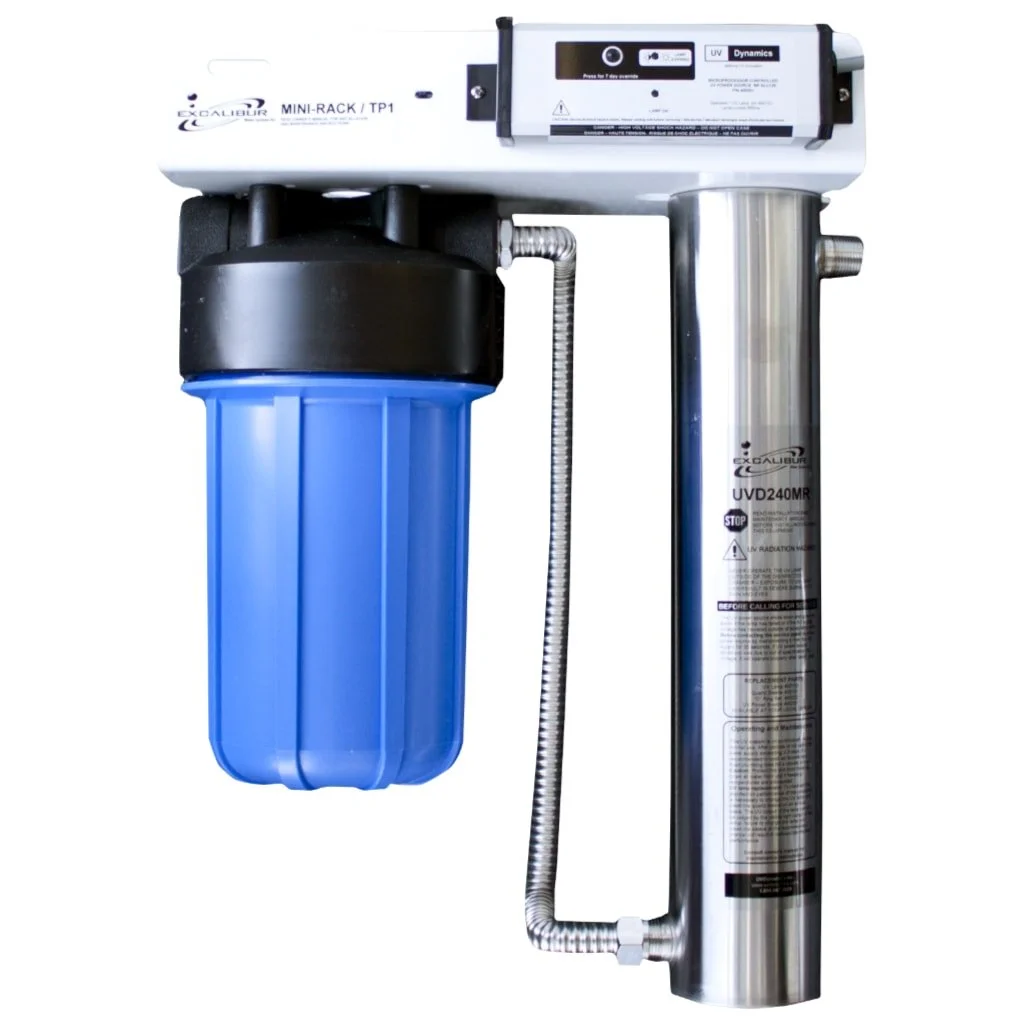
Kills 99.9999% of bacteria and viruses
— including E.coli, coliform, Giardia, and more.
💧
Chemical-free protection
— no chlorine, no residue, no weird taste.
💧
Safe for the whole family
— protects every tap in your home, from drinking to bathing.
💧
Low maintenance
— easy lamp and filter changes, with reminders built in.
💧
Built to last
— long-life bulbs and a 3-year system warranty.
💧
Certified & trusted
— CSA and CE approved for peace of mind.
💧
Eco-friendly
— all the safety without harming the environment.
💧
Fast, effective, and safe for the whole family.
Installed once, it protects every tap in your home — no chlorine, no hassle, just peace of mind.
UV Sterilization
That Works in Seconds
Enjoy Pure, Chemical-Free Water
Unlike chlorine treatments, UV systems add nothing to your water. Preserve natural minerals while eliminating risks of harmful chemicals, keeping your water clean and tasting great.
💧
Cost-Effective & Eco-Friendly
Spend less than $3/year on electricity and avoid costly bottled water. UV systems use no chemicals, making them safe for your family and the planet.
💧
Smart Alerts for Hassle-Free Maintenance
The system alerts you if the UV lamp isn’t working, so you’re never left unprotected. An annual timer reminds you to replace the lamp (a quick, tool-free swap), keeping the system running smoothly year after year.
💧
The industry’s gold standard
Eco-friendly, low-maintenance, and built to last with CSA and CE certification.
Ultraviolet Sterilizing System
Your Questions Answered
(By Someone Who's Actually Installed 1,000+ Systems)
Q: What is UV sterilization and how does it work?
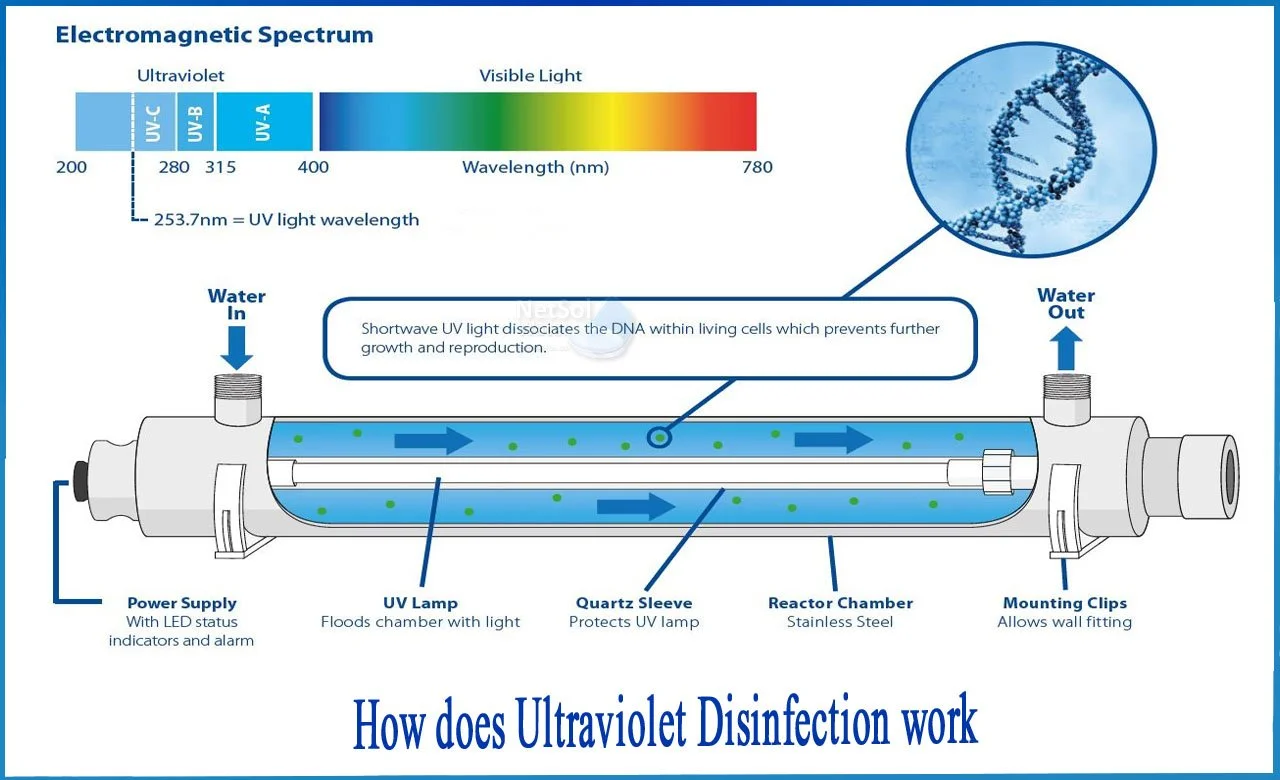
A: UV (Ultraviolet) sterilization is a chemical-free method of killing bacteria, viruses, and other harmful microorganisms in your water using ultraviolet light.
Think of it like this: UV light works like invisible sunlight that's so powerful it destroys the DNA of bacteria, viruses, and parasites, making them unable to reproduce or cause infection. Unlike chemical approaches to water disinfection, UV rapidly and effectively inactivates microorganisms through a physical process.
Here's what happens inside the system:
Water flows through a chamber containing a UV lamp
UV light at 254 nanometers (the germicidal wavelength) penetrates microorganisms
The UV light scrambles their DNA - like frying their control center
They become inactive - unable to reproduce or cause disease
Safe water exits the other side
The process takes seconds. Unlike chemical approaches to water disinfection, UV provides rapid, effective inactivation of microorganisms through a physical process. The retention time required to achieve disinfection ranges from a few seconds compared to several (>30) minutes for chlorine disinfection.
What makes it powerful:
No chemicals added to your water
No taste or odor change
Destroys 99.99% of harmful microorganisms
Works 24/7 automatically
Doesn't remove anything from water (kills organisms in place)
Q: What does UV sterilization actually kill?
A: UV sterilization is incredibly effective at destroying microbiological contaminants. UVGI devices can inactivate microorganisms including bacteria, viruses, fungi, molds, and other pathogens.
Here's what UV kills (99.99% effectiveness):
Bacteria:
E. coli (causes severe illness)
Salmonella (food poisoning)
Legionella (Legionnaires' disease)
Campylobacter (gastroenteritis)
Shigella (dysentery)
Pseudomonas (infections)
Coliform bacteria (indicator of contamination)
Viruses:
Hepatitis A, B, C (liver damage)
Norovirus (stomach flu)
Rotavirus (causes diarrhea in children)
Poliovirus
Adenovirus (respiratory illness)
SARS-CoV-2 (COVID-19 - recent studies confirm UV-C effectiveness)
Parasites & Protozoa:
Giardia lamblia (beaver fever - causes severe diarrhea)
Cryptosporidium (chlorine-resistant parasite)
Toxoplasma
Cyclospora
Important: UV disinfects water containing bacteria and viruses and can be effective against protozoans like Giardia lamblia cysts or Cryptosporidium oocysts. This provides a safe solution against chlorine-resistant microorganisms.
Q: What does UV NOT remove?
A: UV sterilization is NOT a filter. It kills organisms but doesn't remove them or other contaminants.
UV does NOT remove:
Sediment (dirt, sand, rust)
Chemicals (chlorine, pesticides, pharmaceuticals)
Heavy metals (lead, arsenic, mercury)
Minerals (hardness, iron)
Dissolved solids
Taste and odor issues (unless caused by bacteria)
Particles or cloudiness
Why this matters:
UV needs clear water to work effectively
You typically need a sediment filter BEFORE the UV
For complete water treatment, combine UV with other systems
Our typical well water package:
Sediment filter (removes dirt, particles)
Carbon filter (removes chemicals, taste, odor)
Water softener (removes hardness)
UV sterilization (kills bacteria, viruses)
Optional: RO system at kitchen sink (removes everything else)
Each system does a specific job. UV's job is killing organisms - and it's the best at that.
Q: Where does a UV system get installed?
A: Most common: At your main water line (before water enters your home)
Whole-Home UV Installation:
Installed on main water line after pressure tank (well water)
Or after water meter (city water with bacteria concerns)
Treats ALL water entering your home
Every tap, shower, toilet, and appliance gets sterilized water
Typical Installation Location:
Basement or utility room
Near water heater
After sediment filter (required)
Before water softener or other treatment
What you need:
Electrical outlet (UV lamp needs power)
Access to main water line
Space for the UV chamber (about 2-4 feet long depending on flow rate)
Sediment pre-filter (5-micron or better)
Installation takes 2-4 hours for a typical system.
Point-of-Use Option:
Can install under kitchen sink (less common)
Treats only drinking water
Usually paired with RO system
Good for targeted treatment
Q: Do I need UV if I have city/municipal water?
A: Probably not - but there are exceptions.
Why city water usually doesn't need UV:
Municipalities already disinfect with chlorine or chloramine
Water is tested regularly
Meets government safety standards
Treatment plants handle bacteria and viruses
When you SHOULD consider UV on city water:
1. Frequent Boil Water Advisories
Your area has had multiple advisories in past few years
UV provides backup protection
Peace of mind during infrastructure failures
2. Immunocompromised Family Members
Cancer patients undergoing chemotherapy
Organ transplant recipients
HIV/AIDS patients
Elderly with weak immune systems
Extra protection when stakes are high
3. Old Pipes in Your Home or Neighborhood
Pre-1960s homes may have contamination from aging pipes
Water can pick up bacteria between treatment plant and your tap
Miles of old infrastructure = risk
4. You Want Chemical-Free Disinfection
Don't want chlorine taste/smell
Concerned about disinfection byproducts
UV provides disinfection without chemicals
5. You're on a Private Water Line
Small shared well between neighbors
Private water co-op
Any non-municipal source
For most city water customers: UV is optional. Your water is already disinfected.
For well water customers: UV is ESSENTIAL. (See next question)
Q: Do I need UV if I have well water?
A: Yes - absolutely essential.
Here's why:
Well water has NO disinfection:
No chlorine treatment
No government monitoring
No safety net
It's just groundwater pumped into your home
Common well water contaminants:
Coliform bacteria (indicator of fecal contamination)
E. coli (causes severe illness, can be deadly)
Iron bacteria (not harmful but creates slime, clogs pipes)
Giardia and Cryptosporidium (parasites)
Agricultural runoff (fertilizers, pesticides, animal waste)
Even "clean" well water can be contaminated:
Heavy rain can flood bacteria into groundwater
Nearby septic systems can leak
Agricultural activity nearby
Wildlife contamination
Seasonal changes affect water quality
Health Canada and EPA recommend:
Annual bacteria testing for well water
UV sterilization as primary defense
Especially critical for families with children
The cost of NOT having UV:
Severe illness (diarrhea, vomiting, dehydration)
Hospitalization (especially children and elderly)
Chronic health issues
Potential death (E. coli can be fatal)
Bottom line: If you have a well, you need UV. Period. It's not optional - it's critical safety equipment.
Q: How often does maintenance need to be done?
A: Annual maintenance - CRITICAL for effectiveness.
The UV lamp:
Must be replaced every 12 months (mark your calendar)
Even if still glowing, UV output decreases over time
After 12 months, effectiveness drops below 99.99%
This is NOT optional - it's critical
The quartz sleeve:
Cleaned every 6-12 months
Mineral buildup blocks UV light
Takes 10 minutes
DIY or professional service
Pre-filter:
Changed every 3-6 months depending on sediment level
Clogs faster with dirty well water
Clean water is essential for UV effectiveness
What we include in annual service ($150-200):
New UV lamp installation
Quartz sleeve cleaning
Pre-filter replacement
System inspection
Water quality test
Ensure system is working at 99.99% effectiveness
DIY maintenance:
Lamp replacement: Easy (unscrew, replace, screw back)
Sleeve cleaning: Simple (remove, wipe with vinegar solution)
Filter change: Basic (twist off, twist on)
Many customers do it themselves with our instructions. But annual professional service ensures nothing is missed.
Q: What happens if I don't change the UV lamp annually?
A: The lamp loses effectiveness - even if it's still glowing.
Here's what most people don't understand:
UV lamps degrade over time:
Month 1-9: 99.99% effective
Month 10-12: Effectiveness dropping
Month 13+: May be below 90% effective
Month 18+: Could be below 50% effective
But the lamp still glows! Most people think "it's still working" because they see light. That's dangerou...
The reality:
UV output at 254nm decreases with age
Visual light doesn't indicate UV intensity
You can't see or smell bacteria
What this means:
Bacteria, viruses, parasites may survive
You're drinking contaminated water
You THINK you're protected but you're not
Like having a security system that's turned off
Real-world example:
Customer didn't change lamp for 2 years
Family got recurring stomach issues
Water test showed E. coli present
Lamp was still glowing but not sterilizing
Annual replacement isn't a suggestion - it's critical.
Set a reminder: The day you install UV, set a calendar reminder for 12 months. Non-negotiable.
Q: How effective is UV sterilization?
A: Extremely effective - when properly maintained.
The UV system will expose water to UV light and effectively destroy 99.99% of harmful microbiological contaminants in the water.
What "99.99%" actually means:
For every 10,000 microorganisms
UV kills 9,999 of them
Only 1 survives
In practical terms:
E. coli population: Reduced from 1,000,000 to 100
Safe levels: Typically below detection
Effectiveness: As good as or better than chlorine
Research confirms: UV disinfection technology is of growing interest in the water industry since it was demonstrated that UV radiation is very effective against (oo)cysts of Cryptosporidium and Giardia, two pathogenic micro-organisms of major importance for the safety of drinking water.
Why UV is so effective:
Physical process (not chemical)
Destroys DNA directly
Works on ALL microorganisms
No resistance developed (unlike antibiotics)
Instant effectiveness (seconds, not minutes)
Conditions for maximum effectiveness:
✓ Clear water (pre-filtered)
✓ Proper flow rate (not too fast)
✓ Fresh UV lamp (replaced annually)
✓ Clean quartz sleeve
✓ Correct UV intensity
✓ Adequate contact time
When properly maintained: 99.99% effectiveness is real and measurable.
Q: Does UV change the taste of my water?
A: No - absolutely not.
UV sterilization does not introduce any chemicals, flavors, or residues into your water. It only destroys harmful microorganisms, leaving your water safe and fresh-tasting.
Here's why:
UV is purely physical:
No chemicals added
No byproducts created
Nothing dissolves into water
Just light passing through
Compare to chlorine:
Chlorine: Adds chemical taste and smell
UV: Zero taste or smell change
What you'll notice:
Water tastes exactly the same as before
No chemical aftertaste
No metallic flavor
No odor change
If your water tastes bad:
UV won't fix it (not a filter)
You need carbon filter or RO system
UV only kills organisms
The beauty of UV: Unlike chlorine treatment, UV does not alter the taste, smell or chemical composition of the water, resulting in safe water that tastes great!
If you want better-tasting water AND sterilization:
Carbon filter (removes taste/odor)
UV sterilization (kills bacteria)
Result: Great-tasting, safe water
Q: Can bacteria or viruses become resistant to UV light?
A: No - it's physically impossible.
Here's why:
UV destroys DNA directly:
It's not a chemical that organisms can adapt to
It's physical damage to their genetic material
Like saying "can you become resistant to being burned?"
Compare to other treatments:
Antibiotics: Bacteria can develop resistance (genetic mutation)
Chlorine: Some organisms develop tolerance
UV light: No resistance possible (destroys DNA structure itself)
Why this matters:
UV is future-proof
No "superbugs" can evolve
Effectiveness never decreases due to adaptation
As reliable in 50 years as it is today
Even emerging threats:
Recent studies prove UV-C light effectively inactivates SARS-CoV-2 (COVID-19)
Works on new bacterial strains
Works on mutated viruses
Works on everything with DNA/RNA
Bottom line: UV is one of the most reliable disinfection methods precisely because organisms cannot adapt to it.
Q: What if my water is cloudy or has sediment?
A: UV won't work effectively - and here's why:
The problem:
UV light needs to penetrate water to kill organisms
Particles block UV light (like trying to shine a flashlight through mud)
Bacteria hide behind particles (shaded from UV)
Result: Organisms survive, you're not protected
This is why pre-filtration is REQUIRED:
Minimum requirement:
5-micron sediment filter BEFORE UV
Removes dirt, sand, rust, particles
Allows UV light to reach all microorganisms
For very turbid water:
1-micron filter may be needed
Or multi-stage filtration
Or whole-home sediment filter
Visual test:
Fill a clear glass with your water
Can you see through it clearly?
Any cloudiness or particles?
If not crystal clear, you need pre-filtration
During installation:
We always include sediment pre-filter
Sized appropriately for your water
Prevents UV system failure
Required for warranty
Don't skip pre-filtration. It's not optional - it's essential for UV to work.
Q: How much electricity does a UV system use?
A: Very little - about the same as a light bulb.
Typical UV system power consumption:
15-40 watts (depending on size)
Runs 24/7
About the same as an LED light bulb
Monthly electricity cost:
Small system (15W): ~$1.50/month
Medium system (25W): ~$2.50/month
Large system (40W): ~$4/month
Annual electricity cost: $18-50
Compare to:
Running a refrigerator: $100-150/year
Running a water heater: $400-600/year
Running HVAC: $800-1,200/year
UV is negligible in your electricity budget.
What if power goes out?
UV lamp turns off (no sterilization)
When power returns, it turns back on
No damage to system
For critical applications, use UPS (backup power)
Q: How long do UV systems last?
A: The system itself: 10-20 yearsThe lamp: 12 months
Component lifespans:
UV Lamp (Bulb):
Lifespan: 12 months (9,000 hours rated life)
Must replace annually
Cost: $80-120
This is your main recurring expense
Quartz Sleeve:
Lifespan: 2-5 years
May need replacement if cracked or permanently stained
Cost: $30-60
Reactor Chamber (Housing):
Lifespan: 10-20+ years
Stainless steel lasts longest
Rarely needs replacement
Ballast (Power Supply):
Lifespan: 5-10 years
May need replacement eventually
Cost: $100-200
Total system lifespan:
With proper maintenance: 15-20 years
Without maintenance: System fails, needs full replacement
Cost over 20 years:
Initial system: $800
Lamp replacements: $2,000 (20 lamps × $100)
Sleeve replacements: $120 (2-3 sleeves × $50)
Ballast replacement: $150 (once)
Total: $3,070 over 20 years
That's $153/year for safe water
Compare to:
Bottled water: $800-1,000/year
Medical bills from waterborne illness: $2,000-5,000+ per incident
UV is a long-term investment in health and safety.
Q: How do I know if I need a UV system?
A: You probably need UV if you answer "yes" to any of these:
Water Source:
☐ Well water (private or shared)
☐ Lake or surface water
☐ Spring water
☐ Any non-municipal source
☐ City water with frequent boil advisories
Water Test Results:
☐ Positive for coliform bacteria
☐ Positive for E. coli
☐ Any bacterial contamination detected
☐ High total plate count
Health Concerns:
☐ Family members with compromised immune systems
☐ Pregnant women in household
☐ Infants or young children
☐ Elderly family members
☐ Anyone undergoing chemotherapy
Past Issues:
☐ Someone got sick from water (suspected)
☐ Recurring stomach issues
☐ Neighbors have bacteria problems
☐ Recent flooding in area
☐ Agriculture or livestock nearby
If you checked ANY box related to well water: UV is essential, not optional.
If you're on city water and checked 3+ boxes: UV recommended for extra protection.
Q: What if my water test shows bacteria?
A: Don't panic - this is common and fixable.
What positive bacteria test means:
Your water has bacterial contamination
Could be harmless (coliform) or harmful (E. coli)
Needs to be addressed
UV system will solve it
Immediate steps:
Boil water for drinking/cooking until UV installed
Schedule UV installation (we can usually do within 48 hours for emergencies)
Identify contamination source (if possible)
Install UV system
Retest water 2 weeks after UV installation
Common sources of bacteria:
Surface water infiltration after heavy rain
Nearby septic system leaking
Cracked well casing
Animal contamination
Seasonal changes in groundwater
After UV installation:
Water is safe immediately
Retest to confirm (we include this)
Annual testing recommended
Keep up with UV lamp replacement
The good news:
UV kills 99.99% of bacteria
Problem is solved permanently (with proper maintenance)
No need to treat the well (expensive, temporary)
UV protects against future contamination
We've installed hundreds of UV systems after positive water tests. This is routine, fixable, and not a reason to panic.
Q: Will UV kill iron bacteria?
A: Yes, UV kills iron bacteria, but it won't remove the iron or the slime.
Here's what you need to know:
Iron bacteria:
Not harmful to health
But creates slimy biofilm
Clogs pipes, fixtures, appliances
Smells musty/swampy
Makes water look rusty
UV will:
✅ Kill the bacteria
❌ Not remove existing slime
❌ Not remove iron from water
Better solution for iron bacteria:
Shock chlorination of well (one-time treatment)
Iron filter (removes iron that bacteria feed on)
UV sterilization (prevents bacteria from returning)
If you just install UV without treating iron: Bacteria die but iron remains, and new bacteria can grow on the iron.
We typically recommend:
Iron filter BEFORE UV
UV sterilization AFTER iron filter
This prevents bacteria from ever establishing
Q: Can UV remove chlorine from city water?
A: No.
What UV does: Kills organisms What UV doesn't do: Remove chemicals
If you want to remove chlorine:
Carbon filter (before or after UV)
Removes chlorine, taste, odor
Then UV provides chemical-free sterilization
Many people ask: "If city water already has chlorine, why add UV?"
Good question. Two reasons:
Backup protection - If chlorine fails or water main breaks
Remove chlorine but keep protection - Carbon removes chlorine, UV sterilizes
For city water with chlorine taste:
Carbon filter → Removes chlorine
UV sterilization → Kills any organisms
Result: Great-tasting, safe water, no chemicals
Have a question we didn't answer?
Call us at: 705-828-5285
or email: info@purewaterservices.ca